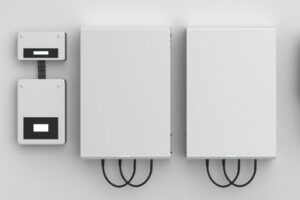
5 Things to Consider Before Purchasing Whole-Home Solar Batteries
As more homeowners in San Antonio, Texas invest in solar panels, interest in whole-home solar batteries continues to grow. Batteries allow you to store excess solar energy, reduce reliance on the grid, and stay powered during outages (an increasingly important benefit in Texas).
But choosing a battery system isn’t just about brand recognition! Before making a decision, here are five critical factors every homeowner should understand to ensure their battery investment truly meets their needs.
1. Warranty Length & Performance Guarantees
A solar battery is a long-term investment, so warranty coverage matters more than most homeowners realize.
Some battery manufacturers offer 10-year warranties, while others- like the FranklinWH aPower2- provide up to 15 years of coverage along with a high energy throughput guarantee. A longer warranty often reflects confidence in battery longevity, performance retention, and durability under heavy use.
When comparing systems from other companies, look beyond just the number of years. Pay close attention to:
Capacity retention guarantees
This shows how much usable energy the battery is guaranteed to keep over time. Some systems only guarantee 60–70% capacity after several years, meaning less backup power when you need it most, especially during hot Texas summers.
Energy throughput limits
Many warranties cap the total amount of energy a battery can deliver over its lifetime. If you use your battery frequently for peak savings or outages, you could reach that limit sooner than expected and lose warranty coverage.
Internet or software requirements
Some batteries require constant internet access or regular software updates to maintain full warranty protection. If connectivity is lost, features (or even coverage) may be reduced.
In Texas, where summer energy demand is high and batteries cycle more frequently, these details can significantly impact long-term value.
2. AC-Coupled vs. DC-Coupled Battery Systems
One of the most important technical considerations is how the battery connects to your solar panels.
Alternate Current (AC)-coupled batteries, like the FranklinWH aPower2, connect on the AC side of your electrical system. This makes them ideal for homeowners who already have solar panels installed. AC-coupled systems are typically:
Easier to retrofit
Compatible with most inverter brands
More flexible for future upgrades
Some competing battery systems use Direct Current (DC) coupling, which can be efficient for brand-new solar installations but may require replacing or limiting inverter choices.
If you already own solar panels, AC coupling often means lower installation complexity and cost while still delivering excellent performance.
3. Battery Capacity, Power Output & Scalability
Not all solar batteries are designed to power an entire home, which is why capacity and performance should be carefully evaluated before purchasing. Homeowners should consider how much usable energy the battery can store (measured in kilowatt-hours), how much power it can deliver at once during normal operation or peak demand, and whether the system can be expanded over time as energy needs increase.
The FranklinWH aPower2 offers 15 kWh of usable capacity per unit, along with strong continuous power output and the ability to scale by adding additional batteries.
This is especially important in San Antonio, where air conditioning, appliances, and home offices can place significant demand on a backup system. Some competing products offer slightly lower capacity per unit, which may require installing more batteries to achieve true whole-home coverage.
4. Battery Modes & Energy Management Features
Modern solar batteries help you control when and how energy is used. High-quality systems should offer multiple operating modes, such as:
1.
Self-consumption (use stored solar energy first)
2.
Time-of-use optimization (reduce usage during peak pricing)
Advanced energy management allows Texas homeowners to reduce grid dependence, stabilize energy costs, and maximize the value of their solar panels year-round.
While some competitors rely heavily on proprietary ecosystems or cloud connectivity, flexibility and local control are increasingly important considerations.
5. Installation Flexibility & Future-Proofing
Your battery system should adapt as your home evolves. When comparing solar batteries from different companies, ask questions like,
“Will this system work with my existing solar setup?”
“Can I add more batteries later?”
“Will it support additional solar panels, EV chargers, or higher loads?”
AC-coupled systems like FranklinWH’s aPower2 are designed to work with a wide range of solar configurations, making them easier to expand without redesigning your entire system.
This flexibility is especially valuable in Texas, where homeowners often add new loads or expand solar capacity over time.
Final Thoughts to Texas Homeowners
While well-known names like Tesla have helped bring attention to solar batteries, the best system for your home depends on warranty strength, system design, capacity, control features, and long-term flexibility, not just brand recognition!
For homeowners in San Antonio and across Texas, choosing the right battery means choosing confidence, reliability, and a system that works seamlessly with your solar panels today and in the future.
If you’d like help sizing a battery system for your home or comparing options based on your actual energy usage, our team at SEP would be happy to help you take the next step toward true energy independence. Call us today! (210) 401-9030
We will be in touch soon!
Want to find out if you qualify for the solar program?
Answer this form and we’ll let you know at your selected time.